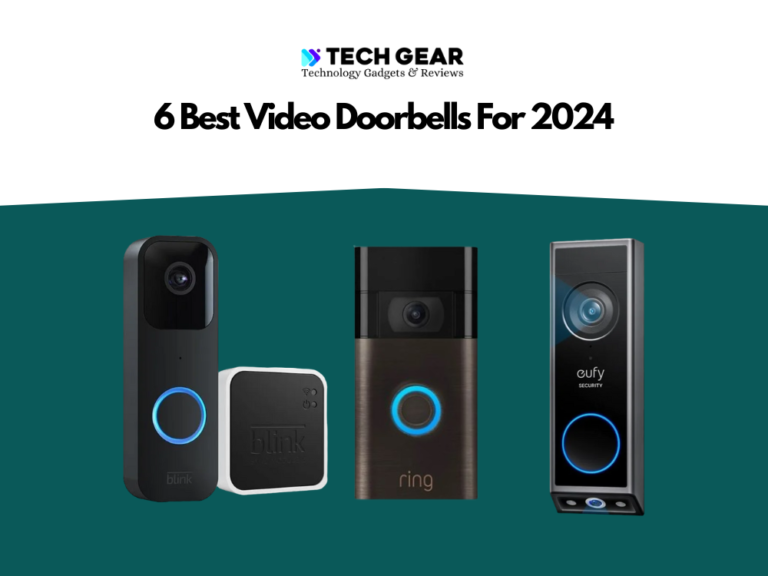
Ring Video Doorbell Review 2026 | Newest Model Advanced Motion Detection
This Ring Video Doorbell Review covers Ring’s most affordable hardwired doorbell camera. It is a wired-only model, so you don’t deal with battery charging. The doorbell records in 1080p HD and includes night vision for clear day-and-night monitoring. Its wide field of view helps cover most porches and entryways without blind spots. Motion detection is responsive and lets you set custom motion zones. You also get two-way talk, so you can speak to visitors in real time. It runs on 2.4 GHz Wi-Fi and works smoothly with Alexa for alerts and live viewing. The Ring Video Wired Doorbell Review begins with a simple fact: this is Ring’s best budget video doorbell, with advanced features.
In the rest of Ring Video Doorbell Review, we test how it performs in real use. We look at daytime detail and low-light clarity. We check motion accuracy, alert speed, and false triggers near sidewalks or driveways. We evaluate audio quality and talk-back delay. We also break down installation, wiring needs, and chime behavior. Finally, we explain what you get without a subscription, what requires a plan, and how this 1080p wired model compares to newer higher-resolution Ring doorbells in 2026.

- Affordable hardwired Ring doorbell with always-on power
- 1080p HD video with solid day and night clarity
- Custom motion zones and fast motion alerts
- Two-way talk for real-time door communication
- Compact design that fits most door frames
- Alexa integration for alerts and live viewing
- No battery mode (wired only)
- 2.4 GHz Wi-Fi only
- Recorded video and advanced alerts need a subscription
- Not the best choice if you want 2K/4K detail
The Ring Video Doorbell Wired is best for people who want a simple, reliable smart doorbell at a budget price and already have existing doorbell wiring. It fits well in apartments, small homes, and office entrances where you mainly need clear 1080p video, fast motion alerts, and easy visitor communication. If your daily goal is to watch deliveries, check who’s at the door, and get quick alerts through the Ring app or Alexa, this model covers those basics without overpaying for higher-resolution hardware.
It’s not the right fit if you need a battery-powered doorbell, dual-band Wi-Fi, or the extra sharpness of 2K/4K models for distant face or vehicle detail. It also makes less sense for renters who can’t access wiring or users who want a fully standalone system without any subscription features. But for wired setups that want dependable front-door monitoring in a compact, affordable package, the Ring Video Doorbell Wired is a strong everyday choice.
| Feature | Specification |
|---|---|
| Model | Ring Video Doorbell Wired |
| Video Resolution | 1080p HD |
| Field of View | 155° Horizontal, 90° Vertical |
| Night Vision | Yes (infrared) |
| Motion Detection | Advanced Motion Detection with Custom Motion Zones |
| Video Pre-Roll | Advanced Pre-Roll (captures moments before motion events) |
| Audio | Two-Way Talk with Noise Cancellation |
| Power Requirement | Hardwired only; requires existing doorbell wiring |
| Supported Voltage | 10–24 VAC (50/60 Hz), or compatible plug-in/transformer power |
| Wi-Fi | 2.4 GHz only |
| Smart Home Support | Works with Alexa |
| Chime Support | Does not ring existing mechanical chime; uses Ring Chime or Alexa for in-home alerts |
| Dimensions (H × W × D) | Approx. 3.98″ × 1.81″ × 0.88″ (about 101 × 46 × 22 mm) |
| Operating Temperature | -5°F to 120°F (-20°C to 50°C) |
| Finish / Colors | Black |
| Subscription | Optional; cloud recording and advanced alerts require a plan |
Design & Build Quality
The Ring Video Doorbell Wired keeps a slim, compact shape that’s meant for tight door frames and apartment entrances where bulkier doorbells can look out of place. The body is lightweight and low-profile, with a simple front layout: camera module at the top, motion/IR sensors integrated around the lens, and a large illuminated doorbell button centered below. The design doesn’t try to look premium or flashy, but it does look clean on most exteriors, and the small footprint makes mounting easier without blocking trim or siding. Because it’s hardwired, there’s no battery door or extra thickness, which helps it sit flatter against the wall.
Build quality is practical for a budget wired model Doorbells. The outer shell uses tough, matte plastic that handles sun and rain without feeling brittle, and the seams fit tightly so there’s no rattle or flex when you press the button. It’s rated for outdoor use in typical front-door conditions—heat, cold, and light rain—so it holds up well for daily exposure as long as it isn’t directly blasted by heavy storms. Overall, the physical design matches the product goal: compact, weather-ready, and sturdy enough for constant everyday use without the higher-end metal finish you’d see on Ring’s Pro models.
Installation & Setup Ring Video Wired Doorbell
Because the Ring Video Doorbell Wired is hardwired-only, installation starts with checking that you already have working doorbell wiring. Once the power is off, you remove the old doorbell, connect Ring’s two wires to your existing leads, and mount the unit to the bracket. The compact size makes placement easy even on narrow trims. If your home uses a standard wired chime, Ring includes a jumper cable for the chime box, but you should know this model is designed mainly for Ring Chime or Alexa-based indoor alerts, so many users rely on those instead of a traditional mechanical ring. After mounting, you restore power and the doorbell boots up automatically.
Setup in the Ring app is straightforward. The app detects the doorbell, walks you through Wi-Fi pairing, updates firmware, then lets you name the device, set motion zones, and enable smart alerts. On a normal 2.4 GHz network, pairing is quick and stable. The on-screen steps are simple enough that most people go from unboxing to first live view in about 10–15 minutes, as long as the wiring is already in place.
Video Quality & Night Vision
In daily use, the Ring Video Doorbell Wired delivers solid 1080p HD video that’s tuned for front-door needs. Daylight footage looks clean and sharp for faces at typical doorstep distance, with good contrast for clothing colors, packages, and basic details. The wide viewing angle helps you see both a visitor’s upper body and what they’re holding, which matters for deliveries. Motion-triggered clips stay clear as long as subjects are within a normal porch range; at longer distances, detail naturally drops compared to newer 2K/4K models.
Night vision is reliable for a budget wired doorbell. Infrared LEDs switch on automatically in low light, and the image stays bright enough to identify visitors close to the door, read simple shapes, and track movement clearly. You’ll still see the usual thermal-camera trade-offs: black-and-white only at night, and less fine detail at the far edge of the frame. But for porch-level security—spotting who came to the door and when—the night view holds up well and doesn’t feel like a weak point in real-world use.
Motion Detection & Alerts
The Ring Video Doorbell Wired uses PIR-based motion sensing combined with Ring’s software detection, and in practice it’s quick enough for everyday porch activity. Alerts trigger reliably when someone approaches the door head-on, and the detection range is well matched to small homes and apartments. The best part is Ring’s custom motion zones. You can draw zones in the app to ignore sidewalks, roads, or neighbor doors, which helps cut down false alerts. Sensitivity adjustment also matters here: at medium settings, it catches walkers and delivery drops consistently without spamming you for every distant movement.
In real use, performance depends heavily on placement. If your door faces a busy walkway, you’ll want tighter zones and slightly lower sensitivity to avoid constant triggers from passing traffic. Once tuned, alerts feel dependable and arrive fast enough to be useful. The doorbell also supports “smart alerts” through Ring’s plan, which separates people from general motion, but even without a subscription the base motion alerts are accurate for close-range front-door needs.
Audio, Two-Way Talk & Response Time
Audio quality is strong for a compact wired doorbell. The microphone picks up voices clearly at normal speaking distance, and the speaker is loud enough for short conversations even with mild street noise. Two-way talk works best when you treat it like a walkie-talkie—speak, pause, listen—because there’s a small delay between your phone and the doorbell. That delay isn’t extreme, but you do notice a beat of lag compared to an in-person conversation.
Response time overall is solid. When someone presses the doorbell, notifications arrive quickly, and Live View usually opens without long buffering as long as your Wi-Fi signal is stable. Because the unit is wired, performance stays consistent over time with no battery-save slowdowns. So for deliveries, quick “leave it there” instructions, or checking who’s outside, the talk-back experience feels reliable and practical, even if it isn’t instant like a phone call.
App Experience
The Ring app is still the main reason people buy Ring doorbells, and the Video Doorbell Wired fits into it smoothly. After setup, your home screen shows a live tile for the doorbell, recent motion events, and quick buttons for Live View, History, and device settings. Daily use is simple: motion alerts open directly into the recorded clip (if you subscribe) or Live View (if you don’t), and the timeline is easy to scroll when you’re reviewing activity. Custom motion zones are handled visually—draw, resize, save—so even non-technical users can tune detection in a few minutes. The app also supports quick sharing, snapshot previews, and basic privacy controls like motion schedules and camera on/off toggles, which matter in apartments.
One thing to keep in mind is that the Ring app is designed around cloud history, so without a plan you’ll see more “live-first” behavior. Live View and two-way talk are free and responsive, but anything involving replay, saved clips, or advanced “person/package” filtering depends on subscription. Still, for a budget wired doorbell, the app experience remains one of the most polished and friction-free in the category.
Smart Home Integration Ring Video Wired Doorbell
This model is built for Amazon’s ecosystem, and integration is strong. With Alexa speakers or Echo Shows, you can get doorbell chimes, motion announcements, and hands-free Live View on compatible screens. That’s especially useful because many buyers use Echo devices as indoor chimes for this wired model. You can also create simple routines like “turn on porch light when motion is detected” in the Alexa app.
Outside Alexa, support is more limited. The doorbell works over standard 2.4 GHz Wi-Fi, and you can get basic notifications on any smartphone, but deeper integrations with Google Home or Apple HomeKit aren’t as complete as competitors that natively support Matter/HomeKit. So if you’re already an Alexa household, it feels seamless; if you’re not, you’ll still get full Ring functionality, just less smart-home “magic” beyond the Ring app.
Subscription & Ownership Cost
Ring moved from “Ring Protect” to the newer Ring Home plans in late 2024, but pricing stayed basically the same.
Here’s what matters for a single wired doorbell:
- Ring Home Basic: about $4.99/month or $49.99/year. Adds cloud video recording (up to ~180 days), event history, person/package/vehicle alerts (where available), and video preview notifications.
- Ring Home Standard: about $9.99/month or $99.99/year. Covers multiple Ring devices at one location and adds extras like Extended Live View and Doorbell Calls in supported regions.
- Ring Home Premium: higher tier mainly for advanced AI search and bigger setups; most single-doorbell buyers don’t need it unless they already run a full Ring ecosystem.
- Without any plan, you still get Live View, real-time motion alerts, and two-way talk, but no saved clips or smart event filtering.
Ownership cost is pretty simple: the doorbell itself is usually priced as a budget model, and because it’s wired you won’t buy batteries. Your real long-term cost comes down to whether you want recordings. If you just need a live front-door “check-in” camera, you can run it free. If you want security history—especially for deliveries—Basic is the sweet spot for most people.
Where It Falls Short Ring Video Wired Doorbell
The Ring Video Doorbell Wired delivers great value for a budget wired doorbell, but its low price comes with a few clear compromises. Most of these limits are tied to keeping the model compact and affordable, so they don’t ruin the experience—but they do matter depending on your setup and expectations.
- Wired-only power: There’s no battery mode at all. If you don’t already have doorbell wiring, installation becomes more complex or impossible without an electrician.
- 1080p resolution in a 2K/4K market: Video is sharp for doorstep distance, but it can’t match the extra detail newer Ring models provide for longer-range identification.
- 2.4 GHz Wi-Fi only: It won’t connect to 5 GHz networks, so signal strength and congestion on older routers can affect performance.
- Full value requires a subscription: Live View and alerts are free, but saved recordings, event history, and advanced “person/package” filtering need a Ring plan.
- Limited chime support: Many users rely on Ring Chime or Alexa for indoor alerts, since traditional chime behavior isn’t always the main focus of this model.
None of these drawbacks make it a bad doorbell—they just define its role. If you have existing wiring, want a reliable Ring/Alexa front-door camera, and don’t need higher-than-1080p detail, these trade-offs are easy to accept. But if you need battery flexibility, dual-band Wi-Fi, or more advanced video clarity, stepping up to a newer wired Ring model will make more sense.
Comparison With Competitors
In the budget wired doorbell tier, the Ring Video Doorbell Wired competes on simplicity and ecosystem value rather than headline specs. It delivers 1080p HD video, reliable motion alerts, and strong Alexa/Ring app integration in a compact wired-only body. That makes it one of the most affordable ways to get into Ring’s platform, but it also means you’re choosing stability and price over advanced extras.
Ring Video Doorbell Wired vs Google Nest Doorbell (Wired, 2nd Gen)
Both are wired-only doorbells built for always-on front-door coverage. Ring focuses on simple 1080p video, quick alerts, and the smoothest experience if you already use Alexa or other Ring devices. Nest gives a taller head-to-toe view that’s better for seeing packages near the door, and it fits best in a Google Home setup. Choose Ring for Alexa-first simplicity; choose Nest if you want a more vertical porch view and Google ecosystem features.
Ring Video Doorbell Wired vs Eufy Video Doorbell 2K (Wired)
Eufy’s wired 2K doorbell is the sharper-video, no-subscription alternative. Its higher resolution shows finer facial and package detail, and local storage means you can avoid monthly cloud fees. Ring’s advantage is ecosystem maturity: more consistent alerts, easier smart-home routines with Alexa, and a stronger app flow for multi-device homes. Pick Eufy for maximum detail and local storage; pick Ring for the most polished Alexa/Ring experience.
Ring Video Doorbell Wired vs Philips Hue Secure Video Doorbell
Secure Video Doorbell is a newer wired rival that leans into wide head-to-toe coverage and strong integration with Hue lighting automations. It’s ideal if your home already runs on Hue lights and you want motion to trigger lighting scenes. Ring stays ahead on platform depth, subscription tools, and long-term refinement of motion and notifications. Hue is best for Hue-centric smart homes; Ring is best for proven, everyday doorbell security with broad ecosystem support.
| Model | Power Type | Video Resolution / Aspect | Field of View | Storage / Subscription | Smart Assistant Ecosystem | Key Strength | Main Trade-Off |
|---|---|---|---|---|---|---|---|
| Ring Video Doorbell Wired | Wired only (existing doorbell wiring) | 1080p HD | Wide porch view (Ring entry wired class) | Cloud recording requires Ring Home plan for saved video beyond Live View | Alexa-first, works tightly with Echo & Ring ecosystem | Best low-cost wired Ring option, fast alerts, strong Alexa routines | No battery mode; subscription needed for meaningful video history |
| Google Nest Doorbell (Wired, 2nd Gen) | Wired only | 960 × 1280 (vertical 3:4 view) | 145° diagonal | Cloud history via Google Home Premium/Nest Aware tiers; limited free event viewing | Google Home / Gemini smart home, also supports Alexa basics | Taller head-to-toe view for packages + people; strong Google Home AI features | Lower base resolution than Ring/Eufy; best features tied to subscription |
| Eufy Video Doorbell 2K (Wired) | Wired only | 2K (2560×1920) HDR, 4:3 | 160° | Local storage built-in (no mandatory cloud fee) | Alexa / Google Home supported (varies by setup) | Highest detail per dollar + privacy-leaning local storage | App/AI alerts not as polished as Ring; ecosystem smaller |
| Philips Hue Secure Video Doorbell | Wired only | 2K | 180° horizontal/vertical coverage | Some free storage; advanced features optional via Hue Secure plans | Works with Hue smart home + major assistants via bridges/platforms | Widest view + sharp 2K hardware, great if you already use Hue | Newer platform, fewer doorbell-specific features than Ring’s mature system |
Quick Buying Takeaway
Ring Video Doorbell Wired is the best fit for Alexa/Ring households wanting dependable, low-cost wired security. Nest Wired is stronger for Google Home users who prioritize a taller package-friendly view. Eufy 2K is the value choice for people who want sharper video and local storage without subscriptions. Hue Secure makes the most sense if Hue lighting automations are central to your smart-home setup.
Final Verdict
The Ring Video Doorbell Wired is one of the best-value wired doorbells you can buy in 2026 if your main goal is simple, always-on front-door security without paying pro-model prices. You get the essentials that matter for everyday use: 1080p HD video with night vision, reliable motion alerts, and clear two-way talk, all running on constant power from existing doorbell wiring. In real usage, it feels quick and dependable for checking visitors, monitoring deliveries, and handling daily motion activity, and it integrates especially well if your home already uses Alexa or other Ring devices.
The trade-offs are straightforward. This model is wired-only, doesn’t provide the higher resolution or extra motion tech found in newer premium doorbells, and it’s built around Ring’s ecosystem—meaning video history and smart event features require a subscription. It also won’t ring a traditional indoor chime by itself, so most users pair it with a Ring Chime or Echo speaker. If those limits fit your needs, the upside is huge: you’re getting a compact, low-maintenance doorbell camera that covers the core security job really well for the money. For small homes, apartments, and budget-smart buyers who want reliable alerts and strong app experience more than fancy extras, the Ring Video Doorbell Wired remains an easy recommendation for 2026.